The Critical Thinking Co.™
"Critical thinking is the identification and evaluation of evidence to guide decision making. A critical thinker uses broad in-depth analysis of evidence to make decisions and communicate his/her beliefs clearly and accurately." "Critical thinking includes the ability to respond to material by distinguishing between facts and opinions or personal feelings, judgments and inferences, inductive and deductive arguments, and the objective and subjective."
Changes in Social Security disability application process affect Louisianans
Administration has recently implemented changes
to their Social Security Disability Income application process,
including the reinstatement of the reconsideration step in the claim
application process in five states, with Louisiana among them.
The SSA removed the reconsideration step from the claim application
process in ten states in 1999, and is adding it back now as part of an
effort to save money. Some filing for disability may benefit from
reconsideration, but others will see longer delays in claim processing.
“What people basically need to know is that starting January 1,
Louisiana applicants see a new step in the process of filing for SSDI,”
said Mike Stein, assistant vice president of Operations Strategy and
Planning with Allsup, an organization that helps claim applicants
navigate the process.
“Reconsideration takes places after an initial application has been
denied, which happens in two out of every three claims. For the 13
percent of people who get accepted after reconsideration, this step
saves them time and saves the government money. The other 87 percent of
applicants will continue to the appeal process, so reconsideration
effectively adds three to six months processing time to their claim,”
Stein said.
Part of FICA taxes workers pay each year funds SSDI benefits, as sort
of a long term insurance program for workers who become injured beyond
their ability to continue working.
“There are a lot of myths and misconceptions about the program,”
Stein said. “People think it’s easy to get on and the government just
gives away money, but it’s actually a very stringent program. It’s only
open to people who have paid in through their taxes and have been
injured in a serious and long term way. So, most of our clients are
people who have been dealt some of the worst hands anyone can be dealt,
from a medical standpoint.”
After a worker is injured and files a claim with the SSA, an initial
determination is made after four to six months, with about 34 percent of
claims approved on average. For nearly twenty years, Louisiana
claimants moved from an initial rejection into an appeal process, held
before a judge, with wait times that currently average around 450 days.
Rejected claims filed after January 1 will now move into the
reconsideration phase prior to an appeal process.
“Back in the late 90s, the SSA looked at the reality that only 13
percent of applications were accepted following reconsideration and
decided to see if they could save money, or speed things up, by
eliminating that step,” Stein said. “The Trump Administration now says
it has research indicating it could result in a net savings to keep
reconsideration.”
SSDI appeal hearings are expensive, requiring judges, vocational and medical experts and travel budgets. “The Trump Administration says that 13 percent less appeal hearings
could save money,” Stein said. “For the people who see their application
granted during reconsideration, this will also save time. The vast
majority of people will see additional time and paperwork as part of
their SSDI claim process.”
There has been some controversy surrounding the introduction of the
SSA’s new policy. During a congressional meeting of the House Ways and
Means Committee last summer, several members objected to the
reinstatement of the reconciliation process, and acting SSA commissioner
Nancy Berryhill signed a letter along with eleven members of Congress
arguing that “there is little evidence to show that reconsideration is a
meaningful step in the disability appeals process.”
Despite some resistance to recent changes, the Trump Administration
has nominated a new commissioner to head the agency – Andrew Saul – and
plans to move forward.
“They have a roll out schedule in place and we can expect to see more
changes in April and October, and well as early next year. These
changes can make an already complex situation more confusing, and we
just encourage people to hire someone knowledgeable to try and shorten
what will already be a long time without income after an injury,” Stein
said. 28th January 2019
By Meghan Holmes Contributing Writer
The Social Security
Robert W. Patterson, a right-wing commentator turned acting associate
commissioner at the Social Security Administration’s (SSA) Office of
Strategic and Digital Communications, once railed against married women,
homosexuality, and condoms, according to a series of clips gathered by
liberal watchdog Media Matters for America.
In a 2011 since-removed Washington Examiner
op-ed, Media Matters reports, Patterson wrote that the government “has
facilitated the movement of mothers out of the home economy and into the
market economy, undermining the family as an economic unit, marriage as
a lifelong partnership, and the well-being of children.”
He has
also reportedly worked for two anti-gay organizations, criticized the
American Psychiatric Association for not listing homosexuality as a
mental disorder, and advocated for conversion therapy, a practice that
has been resoundingly debunked. Media Matters also cites a report from ThePhiladelphia Inquirer, which summarized a piece Patterson co-wrote for the conservative journal Family in America. The piece, the Inquirer
notes, summarizes recent family-related studies—and covers one study
which claims that condom use deprives women of the “remarkable”
chemicals in semen. The study also claims that “semen-exposed women”
performed better on cognitive tasks.
(Washington, DC, Jan 11, 2019) — The following is a statement from Alex Lawson, Executive Director of Social Security Works, in reaction to a Media Matters exposé on
the outrageous misogyny and homophobia of Robert W. Patterson, who
Donald Trump appointed as an Associate Commissioner at the Social
Security Administration:
“American workers earn their Social Security benefits with every
paycheck. It is the responsibility of the federal government to
competently and fairly administer those benefits.
Donald Trump has made a mockery of that responsibility by appointing a
horrific bigot and crackpot, who seriously believes that condoms rob
women of “remarkable chemicals” in semen, to a key leadership position
at the Social Security Administration. Robert W. Patterson must resign
immediately. ”
Part of the Trump administration’s numerous vacancies, the president
claims, are by design. Trump has frequently decried the numerous White
House staffing positions as government waste, saying in an October
interview with Forbes that his administration “[doesn’t] need as many people.”
“I’m
generally not going to make a lot of the appointments that would
normally be — because you don’t need them. I mean, you look at some of
these agencies, how massive they are, and it’s totally unnecessary. They
have hundreds of thousands of people,” Trump told Forbes.
Experts, however, say that simply not staffing his administration doesn’t work the way Trump claims.
“There
is a legitimate case to be made for de-layering government, for
reducing the number of political employees, but you have to do that
intentionally,” Max Stier, president of the Partnership for Public
Service, told the Guardian.
“Failing to nominate people in a reasonably quick fashion isn’t the
same as intentionally deciding, saying that you want to remove certain
jobs from government so that you can make it more streamlined. The
latter would be, I think, welcomed.”
Many of the vacant positions, NPR
noted in October, are temporarily filled by career civil servants, who
experts said may be more tentative and risk-averse than political
appointees.
These civil servants, Stier explained to NPR, are “the proverbial
substitute teacher; everyone knows you’re not around for the long term.
Whatever decisions you make aren’t going to necessarily stick. You’re
not likely to take the long-term view or handle the most difficult
issues.”
Furthermore, these interim employees’ tenures are now surpassing their legal limits. NPR
reported in November that the Federal Vacancies Reform Act gives
presidential administrations 300 days to fill political appointments, in
order to prevent administrations from simply circumventing the Senate
confirmation process by appointing someone to an acting role
indefinitely. Trump’s administration has blown past the 300-day mark,
meaning that decisions made by an employee in an acting capacity could
be subject to a court challenge as being improperly made.
Well, I offer no apology for what I am posting, for this is truly how I feel.
This is my opinion, not a debate. If you disagree, or find my position
offensive, I'm perfectly fine with that.
I have
lived through several United States Presidents prior to our current
President Trump. In my lifetime, I have never seen nor heard of a
President scrutinized over every word he speaks, humiliated by
the public to the point of disgrace, slandered, ridiculed, insulted,
lied to/about, threatened with death, had his wife and our First Lady
disrespected, & his minor child insulted, threatened & harassed.
I am ashamed and saddened by the ruthless, meanspirited, hateful,
cruel, biased people who display themselves as having no civic pride,
morals, ethics, decency or respect for our country's traditions and
values. My elders and teachers taught me many yrs ago to respect our
President, whether I voted for them or not. All the news stations &
reporters who feel they have the right to perpetuate blatent lies and
fabricate "facts" for a "good story" are dividing our country beyond
belief. Many only report the negative "news" and never the
accomplishments of our President. If people do not research everything
put out by the MSM, they are left to believe all the hate mongering
news. This is leading to so much intolerance that I feel we are nearing
the brink of a civil war! No other President that took the oath of
office, has been on the news 24/7, scrutinized for their every word,
facial expression, decision, handshake, what he eats... NO, he is not
perfect, far from it! No President or person is, including you and
I!!!!! Yes, he makes stupid comments and doesn't use the flowery
language of a "professional politician". However, I believe he truly
loves the United States of America and works tirelessly to make things
better for us all. He is very different than what we've become
accustomed to, thank goodness. The people who would rather see our
country fail than help him do his job need to stop. I was always taught
"If you can't be part of the solution then at least don't be part of the
problem". I personally want our President Donald Trump, as I did his
predecessors, to succeed. To hope for failure is INSANE. United we
stand; divided we fall.
Opinion analysis: Social Security cap on attorney’s fees applies separately to successful representation before a court
According to a unanimous opinion released today, Social Security
law does not impose an aggregate cap of 25 percent on attorney’s fees
for successful representation of a Social Security disability claimant
before both the Social Security Administration and a court. Instead, a
25 percent cap applies separately to representation before the court.
This is a win for attorney Richard Culbertson, who represented a
disability claimant both before the Social Security Administration and
in court. He may now collect separate attorney’s fees for his successful
representation before the court.
The case turned on the meaning of “such representation” in 42 U.S.C. § 406(b), which provides in relevant part:
Whenever a court renders a judgment favorable to a
claimant under [Title II of the Social Security Act] who was represented
before the court by an attorney, the court may determine and allow as
part of its judgment a reasonable fee for such representation, not in
excess of 25 percent of the total of the past-due benefits to which the
claimant is entitled by reason of such judgment.
The opinion, written by Justice Clarence Thomas, first applied a
plain-meaning approach. The court quoted the Concise Oxford Dictionary
of Current English for the definition of “such”: “[o]f the kind or
degree already described or implied,” and declared that “the only form
of representation ‘already described’ in § 406(b) is ‘represent[ation]
before the court by an attorney.’” Based on this statutory language, the
court announced that “the 25% cap applies only to fees for
representation before the court, not the agency.”
Although the court began its analysis by quoting an earlier opinion:
“We begi[n] with the language of the statute itself, and that is also
where the inquiry should end, for the statute’s language is plain,” the
court did not end the inquiry with the dictionary definition of “such.”
Instead, it also considered other provisions of the statute and found
that the structure of the statute and its other provisions were
consistent with its interpretation of the statute.
The court noted that two different provisions, 42 U.S.C. § 406(a) and
42 U.S.C. § 406(b), address different stages of representation and
calculate fees differently. Section 406(b) applies to court
representation and imposes a flat 25 percent cap on fees for court
representation. Section 406(a) applies to representation before the
agency and provides two methods for determining fees for agency
representation. One method, Section 406(a)(2), applies to fee agreements
and caps fees at the lesser of 25 percent of past-due benefits or
$6,000. The second method, Section 406(a)(1), applies when there is no
fee agreement and authorizes the agency to set any fee, including a fee
that exceeds 25 percent of past-due benefits, as long as the fee is
“reasonable.”
The Supreme Court concluded that it would make little sense to apply
the Section 406(b) court-stage cap to agency-stage Section 406(a) fees
or the aggregate of Sections 406(a) and 406(b) fees. First, because many
claimants never litigate in court, it would be incongruous to impose a
25 percent cap on agency fees based on a statutory provision regulating
representation before a court. Second, applying the 406(b) cap to agency
representation without a fee agreement would impose a limitation that
Congress did not include in the relevant statutory provision. According
to the court, “[i]f Congress had wanted these fees to be capped at 25%,
it presumably would have said so directly in subsection (a), instead of
providing for a ‘reasonable fee’ in that subsection [§ 406(a)(1)] and
adding a 25% cap in § 406(b) without even referencing subsection (a).”
The court then turned to amicus Amy Weil’s argument that, when the
statute is read as a whole, it is evident that Congress intended to
place a cumulative 25 percent cap on attorney’s fees. The court
acknowledged that Weil was correct in noting that the Social Security
Administration only withholds a single pool of 25 percent of past-due
benefits from which to pay fees for both agency and court
representation. The court, however, noted that the single pool was the
result of agency policy and the statute itself authorizes two pools of
money for direct payment of fees. More importantly, according to the
court, “the amount of past-due benefits that the agency can withhold for
direct payment does not delimit the amount of fees that can be approved
for representation before the agency or the court.” Until 1968, the
Social Security Act allowed fees for successful representation before
the agency but did not provide for direct payment from past-due
benefits. In addition, under current “§§ 406(a)(1) and (4), the agency
can award a ‘reasonable fee’ that exceeds the 25% of past-due benefits
it can withhold for direct payment.”
The outcome is not surprising in light of the clear text of the
statute and the fact that neither party defended the judgment below.
Although Weil “ably discharged her assigned responsibilities” as amicus,
and “despite the force of [her] arguments,” the court ruled against her
as it does in 75 percent of cases with court-appointed amici curiae.
Argument preview: Justices consider cap on attorney’s fees for
successful representation of Social Security disability claimants
(Corrected)
Attorney Richard Culbertson successfully represented several Social
Security disability claimants both before the Social Security
Administration and in federal court. Prior to his representation, he
entered into fee agreements that provided that the clients would pay him
attorney’s fees equal to 25 percent of past-due benefits for successful
representation before the court as well as separate attorney’s fees for
successful representation before the agency. Following longstanding
precedent of the U.S. Court of Appeals for the 5th Circuit, adopted by
the U.S. Court of Appeals for the 11th Circuit, the court below capped
his attorney’s fees at 25 percent of past-due benefits for
representation before both the Social Security Administration and the
court.
In granting certiorari, the Supreme Court agreed to resolve a split
among the federal courts of appeals as to whether the Social Security
Act imposes an aggregate cap on attorney’s fees of 25 percent of
past-due benefits for representation before both the court and the
Social Security Administration, or instead the 25 percent cap applies
separately to representation before the court.
The Social Security Act regulates the amount and manner in which an
attorney may collect fees from a disability claimant for successful
representation before the agency and the court. 42 USC § 406(a) governs
attorney’s fees for successful representation before the agency, while
42 USC § 406(b) governs attorney’s fees for successful representation
before the court. The Equal Access to Justice Act also authorizes a
court to order recovery of “reasonable attorney’s fees” from the
government in certain cases in which the claimant is successful and the
government’s position was not “substantially justified.” If attorney’s
fees are awarded under the EAJA and under Section 406(b), the attorney
must refund the lesser fee to the claimant. The Social Security
Administration withholds a single pool of 25 percent of past-due
benefits from which to certify for payment any and all attorney’s fees
awarded under Section 406(a) and/or 406(b).
Section 406(a) authorizes two avenues for recovery of attorney’s fees
from a claimant for successful representation before the agency. Under
Section 406(a)(1), an attorney may file a “fee petition” with the Social
Security Administration. Alternatively, under a more recent and more
commonly used, streamlined process, an attorney may seek approval of a
“fee agreement” with a claimant under Section 406(a)(2). No cap is
imposed under Section 406(a)(1). Section 406(a)(2) limits attorney’s
fees to the lesser of 25 percent of past-due benefits or a specified
dollar amount, currently set at $6,000.
For successful representation before a court, Section 406(b)(1)(A) provides in relevant part:
Whenever a court renders a judgment favorable to a
claimant under [Title II] who was represented before the court by an
attorney, the court may determine and allow as part of its judgment a
reasonable fee for such representation, not in excess of 25 percent of
the total of the past-due benefits to which the claimant is entitled by
reason of such judgment.
Section 406(b)(1)(A) further provides that “no other fee may be
payable or certified for payment for such representation except as
provided in this paragraph.”
Focusing on the “plain meaning” of Section 406(b), Culbertson argues
that the term “such representation” in Section 406(b)(1)(A) clearly
refers to the antecedent phrase “represented before the court,” and thus
under the plain meaning of Section 406(b), the 25 percent cap applies
to representation “before the court by an attorney” and does not include
representation before the agency. Culbertson also argues that a
separate cap on attorney’s fees for representation before the court is
consistent with the structure of Section 406 as well as the purpose of
the statute and its legislative history.
Almost 40 years ago, in the first circuit-court decision to address this issue, Dawson v. Finch,
the 5th Circuit held that Section 406(b) imposes an aggregate cap on
attorney’s fees for representation in the administrative proceedings as
well as before the court. In reaching this result, the 5th Circuit
looked to the legislative history of the provision in order to discern
Congress’ intent. Specifically, the court focused on the fact that
Congress added Section 406(b) to address two goals. First, Congress
sought to encourage effective legal representation by “insuring lawyers
that they will receive reasonable fees directly through certification by
the Secretary.” Second, Congress sought to protect claimants against
excessive attorneys’ fees, which in the past had reached one-third to
one-half of claimants’ past-due benefits, by imposing the 25 percent cap
on fees. In 1982, the U.S. Court of Appeals for the 4th Circuit also
looked to this legislative history to hold in Morris v. Social Security Administration that Section 406(b) imposes a cumulative 25 percent cap on attorney’s fees.
More recently, the U.S. Courts of Appeals for the 6th, 9th and 10th
Circuits have focused on the text of section 406(b) to hold that the 25
percent cap only applies to representation before a court. See Horenstein v. Secretary of Health and Human Services; Clark v. Astrue; and Wrenn v. Astrue, respectively.
The commissioner’s position on this issue has flipflopped over the
years. Almost 40 years ago, the commissioner sided with the 5th Circuit
in interpreting Section 406(b) to impose an aggregate cap and opposed
the grant of certiorari in Dawson. Then about 15 years later, the commissioner sought and obtained 6th Circuit en banc review of the panel’s decision in Horenstein v. Secretary of Health and Human Services
based on arguments that were logically inconsistent with an aggregate
25 percent cap. Almost 15 years after that, the commissioner argued in
briefs before the 9th and 10th Circuits that an aggregate cap honors
congressional intent and it would be inappropriate to permit attorneys
to potentially collect up to 25 percent of a disability claimant’s
past-due benefits at both the agency and court levels.
In this case, the acting commissioner initially supported the 11th
Circuit’s rule imposing an aggregate cap. Then, after requesting four
extensions to file a response, the acting commissioner filed a response
siding with Culbertson and arguing that the text of Section 406(b)
unambiguously applies the 25 percent cap only to attorney’s fees for
representation before a court. The acting commissioner further argues
that a 25 percent cap would be inconsistent with other provisions of
Section 406(a) and that the absence of an aggregate cap does not mean
that the agency and courts should approve fees that in the aggregate are
equal to or greater than 50 percent of a claimant’s past-due benefits.
Because the acting commissioner agrees with Culbertson, the Supreme
Court appointed Amy Levin Weil, an experienced 11th Circuit appellate
litigator, to serve as amicus curiae in support of the 11th Circuit’s
decision. Weil argues that the statute itself does not specifically
state whether combined attorney’s fees may exceed 25 percent, and that
the text of Section 406(a) and Section 406(b), read together, supports
the aggregate rule. She also points to the legislative history on which
the 4th and 5th Circuits relied in support of an aggregate 25 percent
cap. She contends that permitting attorney’s fees to exceed 25 percent
in the aggregate could lead to attorneys suing their clients to collect
fees out of their present or future Social Security benefits contrary to
the Social Security Act’s purpose of ensuring beneficiaries a protected
source of income. She also argues that rejecting the 25 percent
aggregate rule would lead to absurd results, with fees of up to 75
percent of past-due benefits if a favorable district court opinion is
appealed and the applicant is successful in the court of appeals. She
contends that the aggregate cap allows a logical division of agency and
court fees from the 25-percent-of-accrued-benefit pool in a manner that
recognizes that a portion of the accrued benefits is attributable to the
time that the case was pending before the agency while the other
portion is attributable to the time the case was pending before the
court.
The National Organization of Social Security Claimants’ Representatives filed an amicus brief
in the case. The NOSSCR does not address the plain meaning of the
statute. Instead, it contends that Section 406(b) cannot impose an
aggregate 25 percent cap on attorney’s fees for representation before a
court and the agency because Section 406(a)(1) does not impose a cap on
fees before the agency. NOSSCR further argues that a court has no
discretion to impose an aggregate cap. NOSSCR informs the court that in
circuits without an aggregate cap, the prevailing market rate includes a
cumulative cap either by contract or in practice.
Weil faces an uphill battle in convincing the Supreme Court to uphold
the 11th Circuit’s decision. The plain-meaning approach to statutory
interpretation currently favored by the court supports Culbertson’s
position. Moreover, amici curiae appointed by the Supreme Court
typically only win about 25 percent of their cases.
If, however, Weil can convince the court to look beyond the text of
the Section 406(b) in isolation, it may, like Chief Judge Geoffrey
Crawford of the District of Vermont, find that “it would be strange
indeed to believe that Congress would in 1965 denounce 50% contingency
fees as excessive and enact a statute to stop them, and then, in 1968,
pass a law with the effect of permitting 50% contingency fees.” A previous version of this post inadvertently implied that NOSSCR advocated a particular method for EAJA offsets.
Facing possible financial ruin, ex-Eric Conn clients still can’t get his files on them
Former clients of disbarred
Eastern Kentucky attorney Eric C. Conn will have to wait a little longer
to get access to files in his defunct office that might be of use in
hearings on whether they’ll continue to receive disability benefits.
The Kentucky Bar Association refused to appoint a Receiver for the files earlier, a federal prosecutor said in a court motion.
Because of the “complete
abdication of responsibility by the KBA” for the files, prosecutor
Darren L. McCullough asked U.S. District Judge Danny C. Reeves to
appoint someone to take charge of getting the records to Conn’s former
clients.
There are 6,000 to 8,000 files at the office, McCullough said in the motion.
The issue is important because
the Social Security Administration(SSA) last month began holding hearings on
whether nearly 2,000 former clients of Conn will get to keep their
disability benefits.
The hearings require people to
show they were disabled at the time they originally were awarded
benefits, which is more than a decade in some cases, said Ned
Pillersdorf, a Prestonsburg attorney who has represented dozens of
former Conn clients and helped line up volunteer lawyers for others.
Social Security (SSA) won’t consider
evidence from several medical professionals Conn used to complete
paperwork in clients’ cases because of the potential that the
information was fraudulent.
Conn admitted he filled out evaluations that doctors and a psychologist signed without doing real examinations on the clients.
However, the files in Conn’s
former office may contain evidence from other medical professionals not
suspected of wrongdoing, meaning it could still be used in proving
eligibility, Pillersdorf said.
Pillersdorf said he has learned that Conn did not file key medical evidence in many cases.
That may have been because he
didn’t want to pay the extra cost to do so and didn’t need to,
because
he was bribing a Social Security ALJ David Black Daugherty.
Pillersdorf said Social Security
judges SSA ALJs have refused requests from him and other attorneys representing
Conn’s former clients to delay making decisions in their cases.
Many of Conn’s one-time clients
can’t remember which doctors treated them a decade or more ago, so
without the files Conn kept on them, many of them will have to go
through hearings without information that might help them, Pillersdorf
said.
That despite the old files being stored 12 miles from where the hearings are being held. “That’s scandalous,” Pillersdorf
said. “The files are relevant in that they were likely generated from
2006-2009, which is the time frame the ongoing hearings are focused on.”
Conn, who lived in Pikeville and had an office in Floyd County, is serving a 27-year prison sentence
after admitting using false information in clients’ cases;
paying ALJ David
Daugherty, a Social Security judge, more than $600,000 in bribes; and
other charges.
Conn had been one of the most prolific Social Security disability attorneys in the nation before he was indicted in 2016, representing thousands of people in Eastern Kentucky.
Social Security said it had to
make a new determination of whether about 3,700 of those people deserved
to continue getting disability benefits because of Conn’s fraud.
In the first round of about
1,800, the agency kept benefits in place for about 250 people without a
hearing. Of the rest, nearly 800 lost benefits.
The files at Conn’s old office might have been useful in those hearings, Pillersdorf said. Many people turned down for
continued benefits in those hearings have appealed or re-applied, but
the loss of income has caused financial hardship, and at least three
people committed suicide over the prospect of losing checks, Pillersdorf
said. Disability benefits are an important piece of the economy in some Eastern Kentucky counties.
The 12 counties with the highest
percentage of people receiving disability payments through Social
Security in 2015 were all in Eastern Kentucky, according to a report
issued last year from a division of the Cabinet for Health and Family
Services.
Wolfe County led that list, with 24.92 percent of residents receiving disability.
Statewide, 11.2 percent of
Kentuckians received disability benefits in 2015, the second-highest
rate in the nation, the report said.
Pillersdorf said he and other
lawyers representing Conn’s former clients only learned last spring that
there were hundreds of boxes of files regarding them at the complex of
five interconnected mobile homes Conn used as an office.
Conn has been away from the office since April 2016, either on home detention or jail, or outside the country when he absconded for six months last year.
Eric Conn
was escorted by SWAT team agents prior to his extradition, at the
Toncontin International Airport, in Tegucigalpa, Honduras, Tuesday, Dec.
5, 2017. Conn, a fugitive Kentucky lawyer who escaped before facing
sentencing for his central role in a massive Social Security fraud case,
was captured Dec. 2 as he came out of a restaurant in the coastal city
of La Ceiba.
Moises Castillo AP
Conn’s employees had told former clients their files were no longer available at the office, Pillersdorf said.
Pillersdorf sent the U.S.
Department of Justice an email late last March asking the agency to
preserve the files, which are the property of the clients.
In May, he asked the Kentucky Bar Association to appoint a special commissioner to take charge of the files.
Conn agreed to forfeit the office
to the government so that it could be sold, with proceeds applied to a
$5.7 million judgment imposed as part of his guilty plea.
The state bar association has a
procedure in place to take control of records in the office of an
attorney and distribute them to clients, such as when a lawyer dies or
is disbarred, as Conn was.
However, McCullough said John D.
Meyers, executive director of the bar association, notified prosecutors
in June that the association would not appoint someone to take charge of
Conn’s files.
Meyers said he had told a Justice
Department attorney who contacted him in early April that the process
for appointing a special commissioner is cumbersome and time-consuming.
Before appointing a special
commissioner, the rule requires the bar association to first determine
there is no one else who could wrap up matters at a defunct law office,
Meyers said.
In Conn’s case, the bar
association determined there was a former employee of his office who was
qualified to do that, noting she is familiar with the location of the
files and the filing system, he said.
Meyers said the KBA “will not
speculate” on why the Justice Department and other parties decided not
to let the former Conn employee do the job.
McCullough said the former
employee did not have the resources for the “daunting project” of
dealing with 6,000 to 8,000 abandoned files.
After the KBA decision, the
Justice Department began looking for another option and decided to have
Janet Stumbo, a former state Supreme Court and Appeals Court judge who
is married to Pillersdorf, take control of the files and get them to
Conn’s former clients.
The job, which is likely to be time consuming, would have included compensation.
The department asked Reeves to appoint Stumbo.
Reeves, however, ordered the
government to submit the names of at least three potential receivers,
and said they could not be family members or employees of firms involved
in any matter related to claims arising from Conn’s former
representation of claimants.
That would not allow Stumbo to do the job.
The effort to find another receiver could mean there wouldn’t be one in place until next year, Pillersdorf said.
“At this rate hundreds of former Conn clients either have or will have gone through hearings without their files,” he said.
The government also can’t sell Conn’s old office until the files are out of it.
Duration 2:33
Becoming ‘Mr. Social Security’: The bizarre story of fugitive lawyer Eric Conn
Fugitive
lawyer Eric C. Conn was convicted in a fraud scheme that could have
cost the government more than $550 million in Social Security payments.
Here's how the onetime king of Eastern Kentucky disability cases ended
up on the FBI's most-wanted
By Nicole L. Cvetnic
By Bill Estep
September 17, 2018 02:37 PM
Read more here: https://www.kentucky.com/news/state/article218390780.html#storylink=cpy
'It Wasn't Pleasant': Retired Miami Judge Criticizes Social Security Judicial System After Former Colleague's Suicide
"If I
had known about it, I would have driven down, gotten on a megaphone and
said, ‘Tim, do you really want your son to grow up without a father?’
because he was very caring about the child," said retired judge Thomas
Snook, former colleague of Social Security Judge Timothy Maher, who
committed suicide after a 10-hour standoff with police.
Retired Social Security judge Thomas Snook, Miami. Courtesy photo.
A former colleague of Judge Timothy Maher, a federal jurist who shot
himself with a rifle Aug. 24 after a prolonged standoff with police, is
speaking out about events leading to the incident.
“He wasn’t some maniac running around,” retired Social Security Judge
Thomas Snook said about Maher, who had been arrested days earlier on a
charge of aggravated assault with a firearm after a domestic dispute at a
home in El Portal. “I was very disappointed to read that he wasn’t
Baker Acted.”
Snook, who was appointed to Miami’s Social Security office in 1997
and retired two years ago, took to social media, with a post on
Facebook.
“I hope someone will investigate SSA culpability in this tragedy so it does not happen again,” he wrote. “Please share.”
“I am angry right now that a friend has needlessly died,” Snook’s
post continued. “But I am more angry at how the Social Security
Administration mishandled this tragic situation.”
The Social Security Administration did not respond to requests for comment by deadline.
“I felt helpless in seeing this turn from a tragic situation that
could have been remedied into a death spiral,” Snook told the Daily
Business Review.
Maher’s personal issues arose from beyond the courthouse, and it’s since been reported by the Miami Herald that he owned more than 50 guns and had a “hit list.”
But Snook said that wasn’t the side of the judge that he knew. Miami-Dade County Administrative Law Judge Timothy Maher. Photo courtesy of Miami-Dade courts.
“He was a decent, honorable, good judge, who needed some help and had
some severe personal problems, so I was very sorry and angry to see
that he died,” Snook said.
Snook’s anger is predominantly directed at the Social Security
operation, which he feels ”is not a good model for a judicial system.”
He said the agency is home to a huge backlog of cases.
“That certainly played into my decision to retire,” Snook said.
When he left the bench, judges were “working toward” 50 hearings a month.
“The agency was putting more pressure on the judges to put out more
cases,” Snook said. “Well, the judges aren’t the only person on the
conveyor belt. But that’s unfortunately the way the agency looked at it,
as a productivity issue, when you have to judge each case
individually.”
Snook said he and Maher were among an “overwhelming number” of
disability judges who weren’t able to retain staff because they were
members of a union, the Association of Administrative Law Judges.
“In order to be a union member no one can work for you. It’s a very strange situation,” Snook said. Click here to read a recent audit report from the Office of the Inspector General
Being a social security judge “wasn’t pleasant,” Snook said. That
said, he doesn’t recall an instance when Maher said he felt stressed or
pressured at work.
Back in 2014, Snook and Maher were featured in a Washington Post article, “The biggest backlog in the federal government,” along with Miami Social Security Judge Carol Pennock. It stated that the backlog at that time was over 900,000 cases.
“It’s more than a million now,” Snook said.
That article almost collapsed before it began, but “Judge Maher saved the whole plan,” Snook said.
The reporter, David Fahrenthold, had traveled to Miami to sit in on
another judge’s hearing, but the claimant didn’t show up and the hearing
was canceled.
According to Snook, “Judge Maher immediately said, ‘I have a hearing
coming up in a few minutes and I don’t think the attorney would have any
problem with somebody sitting in on the case. Why don’t you talk to the
attorney?’”
But things took a turn in 2015, when the Office of Disability
Adjudication and Review, or ODAR, conducted an investigation into Maher
over allegations of harassment.
Read ODAR’s letter at the conclusion of its investigation of Maher:
According to Snook, Maher was barred from the Miami office and told
to conduct all hearings from Fort Lauderdale for the duration of the
investigation. The Office of Disability Adjudication and Review also
allegedly instructed Fort Lauderdale staff not to speak to him,
according to Snook.
Snook met Maher before he became a judge, when Maher was an attorney
with the Internal Revenue Service. He expressed interest in becoming a
disability judge, so Snook guided him through the “competitive”
application process.
“As an example of how kind-hearted he could be, I got a gift card in
the mail for a couple hundred dollars to Morton’s Steakhouse from Judge
Maher afterward,” Snook recalled. “He wrote a little note and thanked me
for helping him.”
“There was an allegation brought against Judge Maher. With the
secrecy this agency has, I still don’t know exactly what the allegation
is,” he said. ‘But in any event, they ordered Judge Maher to conduct his
hearings from the Fort Lauderdale hearing office.”
Snook felt like “things weren’t handled well by the agency.”
He remembers Maher as having a “good sense of humor” and being “very
caring” to courthouse employees.
When an attorney Maher knew became involved in a domestic dispute situation, he offered a helping hand.
“(The attorney) actually called Judge Maher and he told her to come
to his home, as, basically, a safe house, and she did,” Snook said.
Ironically, when Maher was arrested Aug. 14, it was after he
allegedly pointing a rifle at his ex-girlfriend in her El Portal home
when he came to pick up their 4-year-old son under a shared-custody
arrangement.
“When this incident with his girlfriend occurred, my understanding
was that Maher went to the office the next day. But he certainly
expressed to some judges that, basically, his career was over, that the
agency would go after him for this,” Snook said.
A week later, Maher held his in-laws hostage inside a house in Homestead, then ended his life.
“If I had known about it, I would have driven down, gotten on a
megaphone and said, ‘Tim, do you really want your son to grow up without
a father?’ because he was very caring about the child.”
The new executive order (EO) granting agency chiefs the power to
hire administrative law judges (ALJs) according to their own
standards—and eliminating the exam and competitive hiring process
formerly in place—could turn the position of ALJ into a politicized one,
critics of the move argue.
The “Executive Order Excepting Administrative Law Judges from the
Competitive Service,” signed by President Donald Trump on July 10,
attempts to solve the problems raised by the Supreme Court’s decision
this year inLucia v. Securities & Exchange Commission. But critics worry about the unforeseen consequences to the regulatory process that this EO may cause.
What happened
In a closely watched case, the Supreme Court in Lucia
held that the common practice of having ALJs appointed by the staffs of
federal agencies was unconstitutional. ALJs, such as those used by the
Securities and Exchange Commission (SEC), are “Officers of the United
States” who can be appointed only by the president, “Courts of Law” or
“Heads of Departments” pursuant to the Appointments Clause of the
Constitution, the Court held.
The
opinion, authored by Justice Elena Kagan and joined by the five
conservative-leaning justices (with a concurrence in part by Justice
Breyer), has resulted in considerable uncertainty, not just for the SEC
but for all federal agencies that use ALJs. ALJs are found throughout
the federal system, from the National Labor Relations Board to the
Federal Energy Regulatory Commission, with the bulk of the approximately
1,900 ALJs found in the Social Security Administration. Before the
president’s July 10 EO, federal agencies had hired ALJs through a
competitive merit selection process administered by the Office of
Personnel Management. After Lucia, this practice might no longer pass constitutional scrutiny.
In
an effort “to eliminate doubt regarding the constitutionality of the
method of appointing officials who discharge such significant duties and
exercise such significant discretion,” Trump issued the EO.
In
the EO, the president explained: “I find that conditions of good
administration make necessary an exception to the competitive hiring
rules and examinations for the position of ALJ.
“These conditions
include the need to provide agency heads with additional flexibility to
assess prospective appointees without the limitations imposed by
competitive examination and competitive selection procedures.”
The
EO “will also give agencies greater ability and discretion to assess
critical qualities in ALJ candidates, such as work ethic, judgment, and
ability to meet the particular needs of the agency,” the president
added. “These are all qualities individuals should have before wielding
the significant authority conferred on ALJs, and each agency should be
able to assess them without proceeding through complicated and elaborate
examination processes or rating procedures that do not necessarily
reflect the agency’s particular needs. This change will also promote
confidence in, and the durability of, agency adjudications.”
Now,
the sole requirement to be appointed an ALJ is a professional license to
practice law and good standing to practice in one of the states, the
District of Columbia, Puerto Rico or any territorial court. As a result,
agency heads have broad discretion to appoint ALJs as they see fit,
with very little oversight.
Critics of the EO expressed concern
that this new process will lead to political appointments that lack the
appearance of independence. “This change will politicize our courts,
lead to cronyism and replace independent and impartial adjudicators with
those who do the bidding of political appointees,” Marilyn Zahm,
president of the Association of Administrative Law Judges, said in a
statement, calling the EO “an assault on due process for the American
people.”
Why it matters
While the White House touted the EO as a means to alleviate uncertainty in the wake of the Lucia
decision and as a more efficient and less burdensome procedure than the
former competitive examination and selection process, critics were not
appeased. Forgoing the merit-based hiring process and putting the
selection power into the hands of politically appointed agency heads
will lead to politicized ALJs, opponents argued. Going forward, it will
be important to watch and see how this new appointments process affects
ALJ decisions throughout the federal agencies.
I am a thoroughly civilized, humane, cosmopolitan, polished, restrained, enjoyable, entertaining Info-maniac. I am a staunch exponent of individual dignity, freedom, equal access to legal services, and equal protection of the law. Here I hope to demonstrate my emotional restraint, humbleness of sentiment, psychological subtlety, lucid style, and simple language, without evading political reality or eternal truth. Daily I am excited that I have the right to create the beginning of a new self and to challenge old habits and attitudes I no longer choose to accept. I choose to relax in the present with my direction firmly in mind. I have an enormous capacity for creative and clever ideas and thoughts. It is phenomenal what I can do. I am capable of so much learning and absorbing a lot of information. My potential is a source of pleasant surprise for me.
Each day, I increase in knowledge, skills, strength, faith, and abilities.With each adventure, the boundary hemming in my potential expands easily to accomodate my growth and achievements.






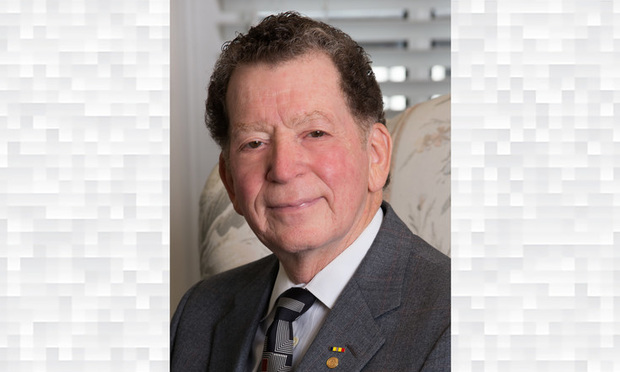 Retired Social Security judge Thomas Snook, Miami. Courtesy photo.
 Related:
 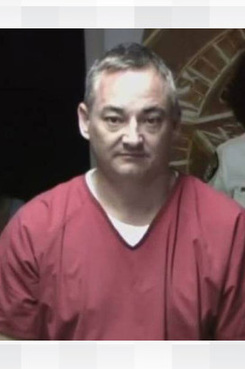 Miami-Dade County Administrative Law Judge Timothy Maher. Photo courtesy of Miami-Dade courts.