Showing posts with label Hungary. Show all posts

Tuesday, January 20, 2015

Ambassador to Hungary Colleen Bradley Bell Arrives In Hungary


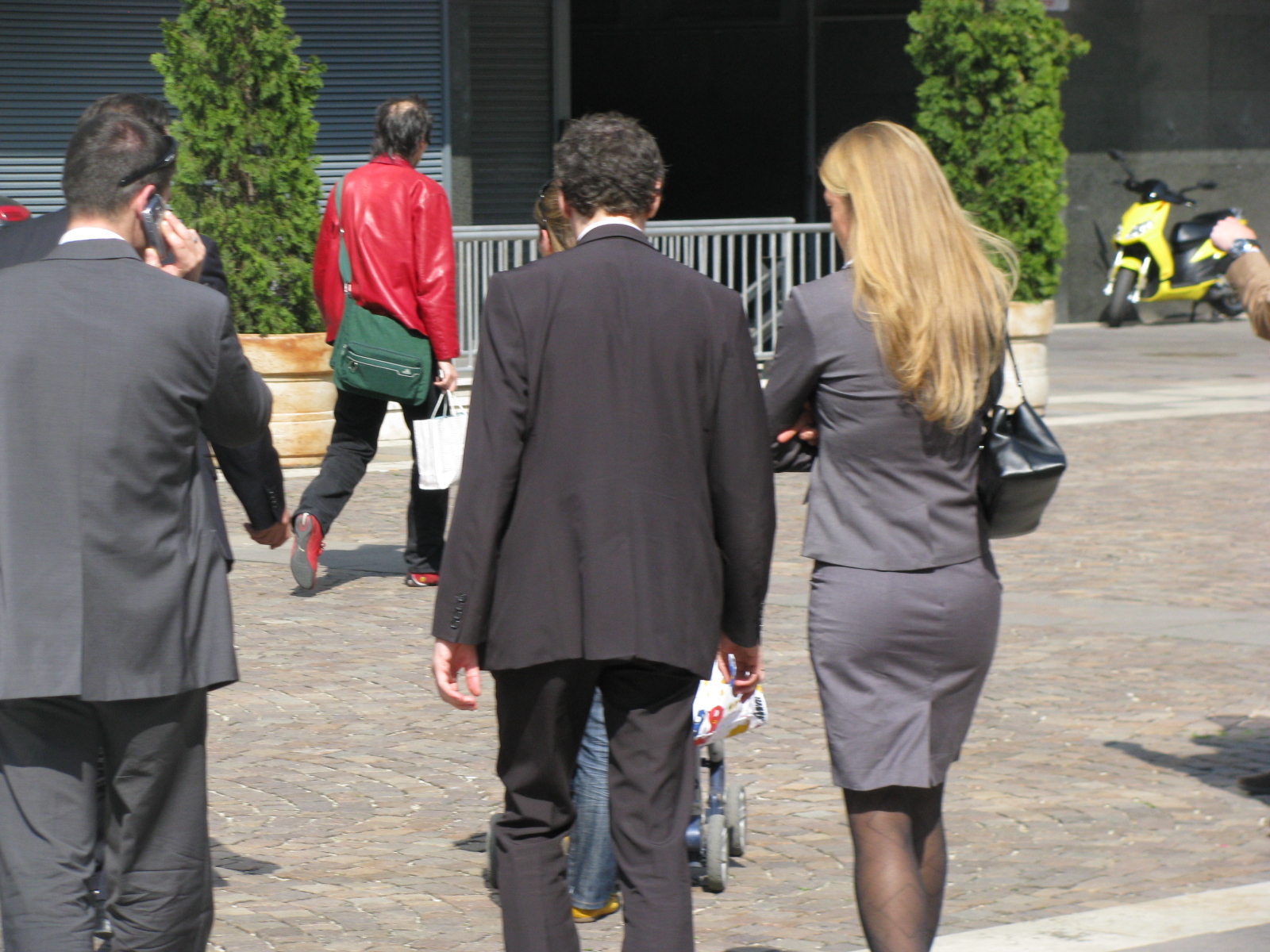
New US Ambassador to Hungary Colleen Bradley Bell, pictured above in center, arrived in the Hungarian capital Budapest. The United States’ highest-level diplomatic representation has resumed following an almost two-year period in of absence of an American Ambassador.

(Ambassador Bell being sworn-in in December 2014)
She was received on behalf of the government by Levente Magyar, State Secretary at the Ministry of Foreign Affairs and External Economic Relations (KKM), at Budapest’s Ferenc Liszt International Airport.
 Mr. Magyar highlighted that the Hungarian government welcomes the ambassador with utmost openness and affection, saying that [the cabinet] “is looking forward to working together with marked optimism”.
The Government is convinced that in the near future, a dialogue will evolve between Hungary and the US which,  will navigate relations in a constructive direction. Economic and military cooperation between the two parties has never been as outstanding and strong as now.
The State Secretary added that with Colleen Bell’s arrival, the United States’ highest-level diplomatic representation has, at long last, resumed, following an almost two-year period in the absence of an US ambassador.


 Ambassador Colleen Bell presented her credentials to President of Hungary János Áder.

After presenting her credentials, Ambassador Bell laid a memorial wreath on the Tomb of the Unknown Soldier in Heroes’ Square, in the name of the people of the United States of America.

  On Tuesday, February 3, 2015, Ambassador Bell and Minister Balog signed an agreement to eliminate dual social security taxation. (See below)


Colleen Bradley Bell (born January 30, 1967) is an American television producer, philanthropist and advocate for the environment, arts and social causes. Bell resided in Los Angeles with her husband, television writer/producer Bradley Bell, and their four children.
 On November 6, 2013, Pres. Obama announced his intent to nominate Ms. Bell as U.S. Ambassador to Hungary. The nomination was controversial and Senator John McCain called her "totally unqualfied". On December 1, 2014, the U.S. Senate voted 50-36 to invoke cloture on Bell's nomination, thus cutting off a Republican-led filibuster. On December 2, 2014, the Senate voted 52-42 to confirm Bell. Bell faced criticisms from Republicans, led by McCain, and commentators over her perceived lack of expertise on Hungary and its current geopolitical situation, as well as for the political nature of her appointment.
Bell was confirmed in December 2014 as the United States Ambassador to Hungary.

(April Foley was President George Bush's Ambassador to Hungary until 2009)
 President Obama’s pick for Ambassador to Hungary, Colleen Bell is a producer for “Bold and the Beautiful” and has raised millions for Obama’s campaign.
 Colleen Bradley Bell, is not only a soap opera producer, she is soap royalty.
Her husband Bradley Bell is scion of soap opera mogul William Bell. The late William Bell worked as a head writer at “Days of Our Lives” before striking gold with his own series “Bold and the Beautiful,” “The Young and the Restless” and the now-defunct “Another World.”
Bell has also served as a Kennedy Center trustee since 2012, alongside Caroline Kennedy, who is U.S. Ambassador to Japan.
 She is somebody that the President has confidence will be able to maintain our relationship with the government and the people of Hungary ... she was chosen because the President has complete confidence in her ability to represent the United States in Hungary.
When describing her qualifications for the job, the newly confirmed U.S. ambassador to Hungary cited a "product" she helped develop that is exported to "more than 100 countries, for daily consumption with more than 40 million viewers."
The product Colleen Bradley Bell produced is the soap opera The Bold and The Beautiful.
The big political donor who becomes an ambassador to a relatively small country is something of a Washington punch line and also a tradition. Presidents have done this for decades. But critics say the Obama administration has taken it too far.
According to the Center for Responsive Politics, Bell and Mamet each raised at least $500,000 for President Obama's campaign in 2012.
At Bell's confirmation hearing, Sen. John McCain, R-Ariz., asked her about America's strategic interest in Hungary. The answer that followed could best be described as a word soup.

"Well, we have a strategic interest," she said. "In terms of what are our key priorities, in Hungary. I think our key priorities are to, um, improve upon as I mentioned the security relationship, and also the law enforcement and to promote business opportunities, increase trade ..."
McCain wasn't impressed. He cleared his throat and asked the question again.
"It's really disgraceful," said McCain following the confirmation vote, which fell neatly along party lines.
Especially, he says, because Hungary is in a perilous state politically, teetering between the influence of Western democracies and Vladimir Putin's Russia. As for Bell's qualifications, White House press secretary Josh Earnest grasped for words at yesterday's press briefing.
"Well she certainly is somebody again, that, that is, has, has had her own distinguished private sector career," said Earnest.
According to the American Foreign Service Association, in Obama's second term a little more than 40 percent of ambassador nominees have been political rather than career diplomats. In recent past administrations the share has been less, 30 percent.
When author Kati Marton was 5 years old, growing up in Hungary, the first American she met was the U.S. ambassador. Her parents, journalists, were deemed enemies of the state and jailed, she says.

"Ambassador [Christian M.] Ravndal made a point of looking after my older sister and me who had been left as, well, political orphans," said Marton, recalling a defining moment in her childhood.
She says he visited them, pulling up in a big Buick with an American flag on the front, a deeply symbolic move in Cold War Hungary.
"The American ambassador in countries that are often forgotten by Washington can play an enormous role, a symbolic role, standing in for what America stands for," said Marton.
Marton is the widow of Ambassador Richard Holbrooke and says she knows rewarding donors is part of the way Washington works.
This year the American Foreign Service Association, which represents career diplomats, came out with four simple qualifications for an ambassador.
"Relevant international experience," explains Bob Silverman, the group's president. "High-level government or other high-level policy articulation experience, good management skills. Good leadership skills."
He opted not to say whether Bell, Mamet and the other recent donor ambassadors met that standard.

Wednesday, December 31, 2014

Trouble in Paradise


Rifts Emerge Within Hungary's Ruling Party

December 30, 2014 | 00:38 GMT


Analysis

Prime Minister Viktor Orban may only have a few months left in office, according to a Dec. 28 report published by Hungarian daily newspaper Nepszava, citing sources close to the ruling Fidesz party. The report describes deep dissatisfaction within the party and a growing sentiment that Orban is an obstacle to success, factors the sources say could lead to a change in leadership following German Chancellor Angela Merkel's planned February visit to Budapest. The report is the latest indication of a growing rift within Fidesz. Although the party won re-election in April and controls two-thirds of the seats in Hungary's parliament, tensions over Orban's increasing isolation and disagreements over the country's foreign policy orientation have increased over the past months. While Hungary's government is unlikely to collapse anytime soon, the rift within Fidesz presents a challenge to Orban — the party's popularity is falling and anti-government protests are on the rise.Fidesz, which stands for the Alliance of Young Democrats, originated in 1988 when a group of 37 young students and intellectuals in two university dorms founded the party as a liberal entity. Orban was one these founding members, and by 1994, he was steering the neophyte party toward the right wing of Hungary's political spectrum. While he was unquestionably the leader of Fidesz throughout the 1990s and 2000s, a group of fellow Fidesz founders and early members played a major role in advising Orban and shaping the party's policies.
What is a Geopolitical Diary? George Friedman Explains.
During his second term as prime minister from 2010-2014, however, Orban started to promote new, younger members of Fidesz to influential posts. Toward the end of the term he was relying on an increasingly small circle of advisors, many of whom were newly appointed officials who lacked significant political or administrative experience. In fact, many of these new appointees owe their positions and political careers to Orban himself. At the same time, many older members of Fidesz were sidelined or relegated to posts outside the country. A number of ministries also had their decision-making authorities removed, further concentrating power in the prime minister's office and in the hands of Orban's contracting inner circle. Dependence on this small group, which seldom challenges Orban's views, has contributed to confusion and frequent changes in policies, alienating many of the party's veterans and elements of the state apparatus. As Orban has centralized power, many of his political allies have been marginalized, and now they are becoming dissatisfied.

Orban's suspicious feelings toward the United States have also contributed to rifts within Fidesz. Some party officials, such as founding member and current chairman of the parliament's foreign affairs committee, Zsolt Nemeth, have long seen the West in a more positive light. While the United States and Hungary have an uneasy relationship because of concerns over the Fidesz government's centralization of power, the relationship has only worsened recently. In October, the United States banned six Hungarian nationals, including the head of Hungary's National Tax and Customs Administration, over corruption charges. Orban responded by publicly pushing department's head to sue the U.S. charge d'affaires in Hungary. A case was filed in December, and Orban repeatedly made public accusations that the United States is acting against Hungary's national interest. Moreover, Hungary has continually made attempts to build stronger ties with Russia, even after the outbreak of the crisis in neighboring Ukraine. These foreign policy moves have combined to further alienate Fidesz members who support a Hungarian alliance with Western partners and increased political backing for the government in Kiev.

These reports of growing rifts within Fidesz come at a time when the party's popularity is waning. Orban was forced to
backpedal on a proposal for an internet tax after one hundred thousand Hungarians staged a protest against the plan in October, threatening to undermine the party's support among its core middle-class constituency. Thousands also rallied against corruption, especially after the government refused to address U.S. concerns regarding corruption in Hungary's National Tax and Customs Administration. While these protests failed to change Orban's policies, in the month following the U.S. bans, one poll showed the Fidesz party's popularity falling by an unprecedented 12 percentage points, demonstrating that strained relations with the United States and ongoing questions over corruption are impacting not only dynamics within Fidesz but also the party's support among voters.

Despite the reported rifts in the ruling party, a faction capable of challenging Orban's supremacy has yet to publicly emerge, though there are indications that some of the party's members are distancing themselves from Orban and maneuvering in anticipation of such a scenario. Although there are doubts about Orban and his small circle of advisors, many Fidesz members have benefited greatly from his rule — both politically and financially. Because of this, they will hesitate to replace him without first building a coalition strong enough to challenge the prime minister. Any contenders will also want assurances that they will not lose their political positions and personal fortunes under a new Fidesz leadership. Orban's rule may not be over, but the foundation of his power — the Fidesz party machine — has come under threat.

For Hungary, 2015 will see the government
strive to avoid international isolation while also facing a host of domestic economic challenges. As a country in the Eurasian borderlands, Hungary has attempted to balance its ties to the West with its relationship with Russia. On one hand, Hungary is a member of both the European Union and NATO, depending heavily on investment and funding from the European Union and its central bank. On the other hand, the Fidesz government has sought to attract investment from Russia in the form of projects that include upgrading its Paks nuclear power plant and supporting the South Stream pipeline project. However, Russia cancelled South Stream
and is facing economic troubles of its own, meaning Hungary has less of an opportunity to benefit from its relations with the Kremlin. Orban miscalculated, and now he finds himself struggling to rebalance the country's foreign alliances.

In a conciliatory gesture to the West on Jan. 1, Hungary will resume reverse natural gas flows to Ukraine after halting them in late September. Nevertheless, with tensions between Hungary and its Western partners still rife, Hungary faces the challenge of avoiding international isolation in 2015. 

 
(Politics con't)
nemethzsolt

US-Hungary Relations Are A Marriage In Deep Crisis, Fidesz’s Zsolt Németh Says

Hungary’s international reputation has worsened dramatically during the past half year and in terms of rhetoric, the conflict between the United States and Hungary is becoming dangerously reminiscent of that of Russian President Vladimir Putin, Fidesz politician Zsolt Németh, chairman of the National Assembly’s foreign affairs committee, has said in an interview given to the news website Index.
Mr. Németh pointed out that it gives cause for special concern that the situation has also worsened in regions that distinctly stood by Hungary in the previous four years, citing the country’s Central European allies as an example. Concerning the case of Ildikó Vida, the chairman of the National Tax and Customs Administration who is at the centre of the US visa ban affair, he said that it is unfortunately to associate someone with allegations of corruption without providing the possibility to defend oneself, adding that among allies, it can be expected from parties to do everything possible to root out unfounded accusations becoming public.
Commenting on US-Hungarian relations, he drew a comparison with a marriage experiencing a deep crisis. “This is the deepest crisis since the marriage took place, a situation in which the two sides occasionally completely loose their sobriety and thir self-control, such as the case involving Senator McCain. However, I do not believe that all responsibility can be laid on the Americans. It takes two to tango”, Mr. Németh said.
In Mr. Németh’s opinion, the aggravation of disputes between the governments of the United States and Hungary can be attributed fundamentally to questions of security policy, such as NATO, Russia and the South Stream, adding that this is no excuse for the country’s allies to disregard unwritten rules. The situation could be resolved if the West would present Russia with a reasonable political offer, the chairman of Parliament’s foreign affairs committee concluded.
via index.hu
photo: index.hu/Orsi Ajpek

Friday, December 28, 2012

The Hungarian Derierre, Desired All Over The World.

Umgarishen Frauen Haben Die Am Besten Arse Um Die Welt.


Dr. Constantino Mendieta (Dr C) is the biggest advocate for butt augmentation in the world.


Unsurprisingly, his practice is in Miami and overrun with sexy nurses with surgically sculpted butts.

 Butt-hungry patients fly in from all over the globe to have his steady hand in their behind, and with good reason – he literally wrote the book on butts.

 It's called The Art of Gluteal Sculpting. In this article he wants to set the record straight.

All of the women pictured in this article are Hungarian, except for Serena Williams.
(Along the Danube on a warm sunny day, in the merry merry month of May)

None of them have had surgical augmentation. What you see is natural. It is just what God gave them.

Make over herself to be an artist? 
What Dr C does is three-dimensional sculpting. It's not just moving around fat – anyone can do that.

 His prices start at around $14,000, but you may find some plastic surgeons who will charge $4,000 for butt augmentation.
(A working lunch in Budapest calls for a stroll to a nearby cafe for quick service.)
The price tag is the difference between going to a hack or getting a real Picasso.

The problem is that some women see the butts of other people who've already had an underground procedure. Initially underground butt injections with stuff like silicone can look fantastic – the problem often occurs several years later. The silicone can, for example, eat away at the flesh. It's mind boggling to me with the advent of the internet how many people think it is safe to undergo those shady procedures.

The bottom line is that there are four different butt shapes that exist, no matter what part of the world or the country you are in. It has to do with measuring two points – the upper-outer part of the upper butt and the lower-outer part of the lower butt. When you measure those points you start to get the A, the V, the Square and the round shapes. (SEE last picture in this article to view the 4 basic shapes.)

Serena Williams, tennis champion.
There are four famous women that most women want to look like. Number one would be J. Lo or Kim Kardashian, they are running head to head. And then Serena Williams and Beyoncé. Also, ever since the royal wedding we've been hearing a lot about Kate Middleton's sister, Pippa – she's got the smaller cute butt.

Serena Williams has a pretty massive ass. I would think not many people could achieve that level of butt, even with plastic surgery. 
Mainly the African Americans ask for that one. A lot of the time the women who seek a Serena butt are already full-figured. So it is in line with their body type. Occasionally, however, I can't deliver it because of their anatomy, so they have to come back for a second procedure.


The prettiest shape is the A. The most complained about shape is the square. The least attractive is the V, followed by the round – but it is a far second. The A shape is what we are always trying to get.

The A shape is basically where a woman's waist is smaller than her hips at a ratio of 0.7. Psychologist Devendra Singh did a study where she found that men – young, old, American, Afghan, whatever – desire women who posses that magic ratio.

It's probably an instinctive thing because A-shaped women tend to be more fertile and have a healthier lifestyle.

How wide those hips are is the cultural factor. Latinos tend to like the "Jennifer Lopez", which is a little bit fuller on the bottom with wider hips. Asians tend to like a little bit narrower hip area because they want to look taller and more slender. African Americans want a huge caboose that is big, full and round everywhere. Caucasians run the gamut – some like a wider hip and some like a narrower hip.

I have never met a butt that I can't make better. I only turn them down because they're not good candidates for medical or psychological reasons, or they don't have enough body fat.

People who don't have any body fat limit what I can do. I have to send them to a Bootie Camp. To build more fat on their body that I can then move into the buttocks, I send them to booty camp.

 I tell them they can eat whatever they want – McDonald's, Burger King… Once they've puffed up I can grab that new fat and put it in their butt. Booty camp is the best prescription they are ever going to get.

When the news came out late last year that some retardedely desperate girls in Miami allowed a transsexual Frankenstein man with grotesquely gargantuan ass and titties to inject their butts with cement and Fix-A-Flat tire sealant in hopes of ballooning their asses to J. Lo proportions, we knew this whole bootylicious thing was starting to get out of control. Surprisingly, that case is just one of many instances last year where people hired quacks to augment their asses – a 20-year-old student in Philly even died from underground silicone butt injections last February.

This seedy scene of backyard assplasty belies a broader trend of women going to extreme measures to improve the shape and girth of their behinds.

 The sane way to do this, beyond squats and eating lots of bonbons, is to go to a plastic surgeon.

There are two general methods that real doctors use to augment your bum – implants and fat transfers.

 Implants in the butt generally follow the same concept as implants in the breast, and have been slowly rising in popularity in the US over the last few years.

 However, fat transfers, also known as the Brazilian Butt Lift, are where all the action is. This procedure involves liposuctioning fat from unwanted places, prepping it and pumping it back into select areas of the butt to create a delicious flesh-apple.

It's hard to get specific statistics on fat grafting, however, because most surgery societies tally fat transfers under liposuction.

The bottom line is that there are four different butt shapes that exist, no matter what part of the world or the country you are in.

It all has to do with measuring two points – the upper-outer part of the upper butt and the lower-outer part of the lower butt. When you measure those points you start to get the A, the V, the Square and the round shapes. he prettiest shape is the A.

 The most complained about shape is the square. The least attractive is the V, followed by the round – but it is a far second. The A shape is what we are always trying to get.